

Invisibubble - A bubble curtain has been installed at the Port of Saint-Tropez to trap hydrocarbons
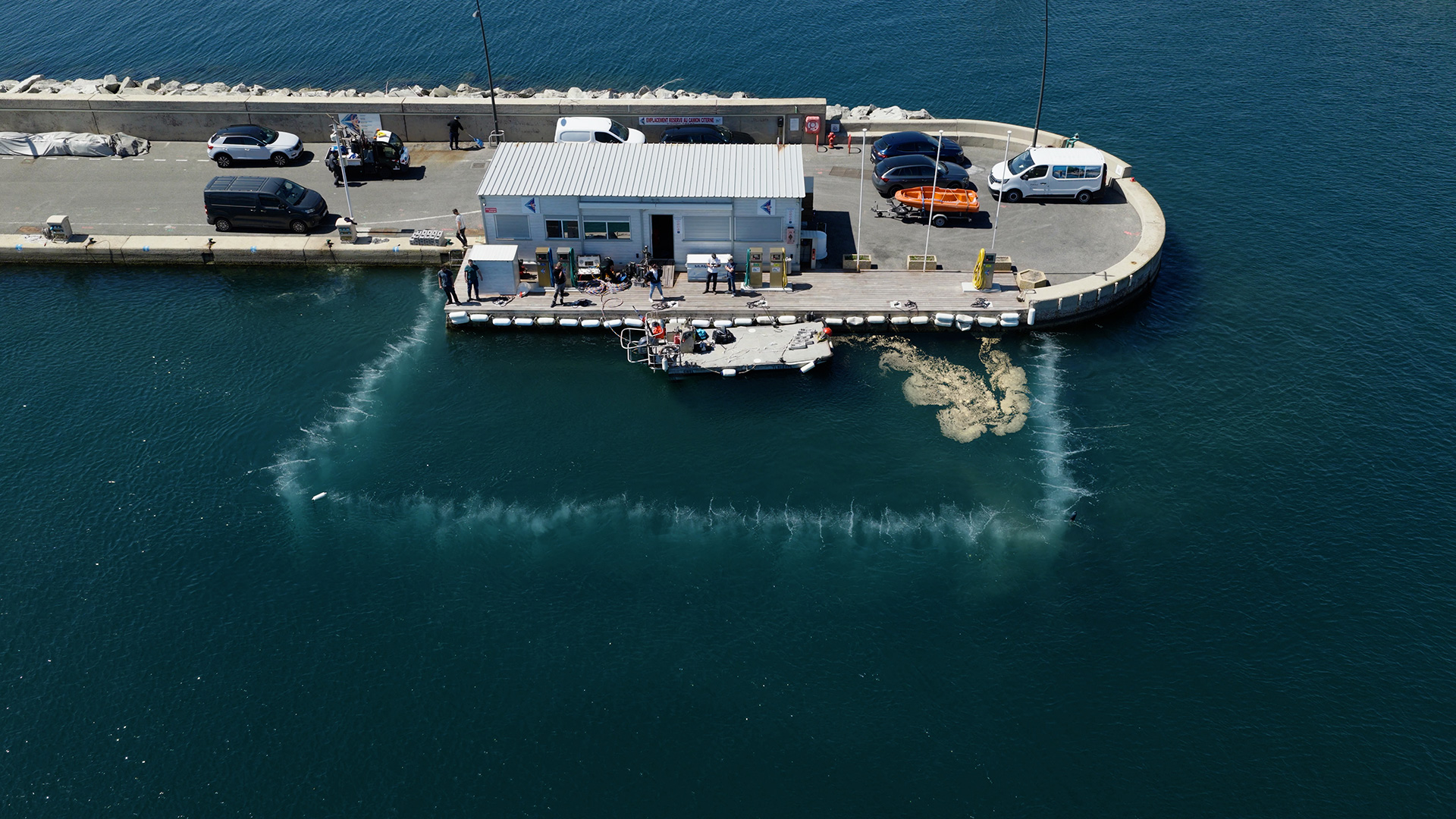
Year
2026
Customer
Phare Vert Fueling Station – Port of Saint-Tropez
Goals
- Contain hydrocarbons spills by limiting their spread.
- Make it easier to pump them by setting up an accessible collection point
- Preserving biodiversity and reducing the spread of invasive plant species
Chosen solution
The installation of a bubble curtain surrounding the Phare Vert refueling station, thereby trapping any oil slick or spill as close as possible to the source of the leak.
Project stakeholders
Description
At the bottom of the sea, one or more hoses, as appropriate, are connected to an air compressor. The pump generates a stream of air that is fed into the perforated hose, allowing the bubbles to escape and creating a veritable bubble curtain, from the bottom of the water all the way to the surface.
This system addresses a common problem in port and marina areas: the leakage of hydrocarbons (fuel, motor oil, grease) that are discharged or accidentally spilled during refueling at the port or marina gas station. Since these are semi-closed ecosystems where water exchange is intentionally limited, the presence of hydrocarbons is almost inevitable (leaks from fuel nozzles, overflowing tanks, drainage residues, etc.), forming a thin film on the surface or mixing with the water column and sediments. The impact is harmful both to ecosystems—due to ecological effects (suffocation of flora and fauna)—and to human health—due to toxicity (the introduction of carcinogenic and bioaccumulative substances into the food chain).
InvisiBubble thus acts as a protective barrier to prevent oil from spreading throughout the entire port. As soon as a user notices a leak, they can activate the bubble curtain by pressing a button to stop it from spreading. The bubble curtain is activated, creating an internal current within the area bounded by the pipes, which concentrates the oil slicks, thereby facilitating pumping.