

Trapping hydrocarbons with a bubble curtain
One common problem in harbor and marina areas occurs when leaks involving oil or other hydrocarbons are poorly contained, or when discharges or accidental spillages take place during refilling at the harbor or marina’s fuel station.
Analysis
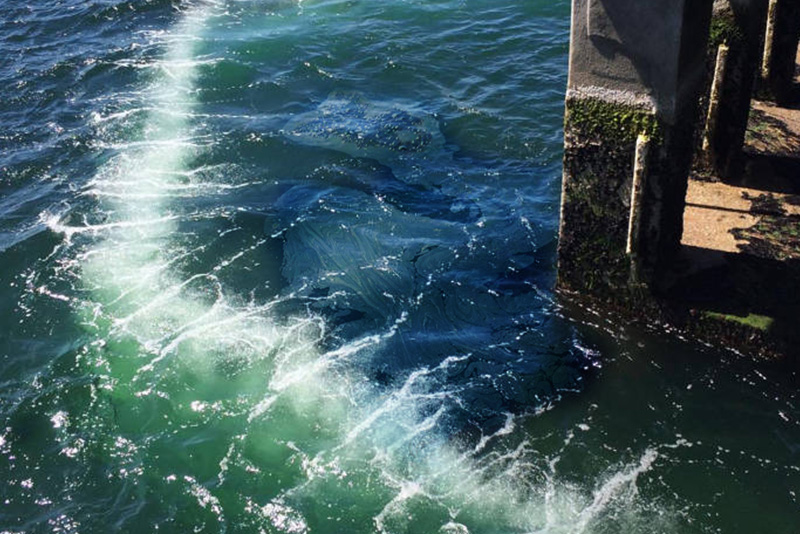
Harbors and marinas are semi-enclosed ecosystems in which the flow of water in and out is intentionally limited. Hydrocarbons (such as fuel, motor oil, and fats) are found in these areas almost as a matter of course, creating a fine sheen on the surface or mixing with the water column and sediment.
This is obviously an issue for a number of reasons:
1/ Environmental impact and toxicity: hydrocarbons prevent air-water gas exchange, asphyxiating animal and plant life. Compounds such as PAHs (polycyclic aromatic hydrocarbons) are carcinogenic and bioaccumulate in the food chain.
2/ Image issues and damage: contaminated water harms tourism appeal and damages infrastructure (causing hull corrosion and odors).
Harbor pollution is rarely the result of a major accident (such as an oil spill), but is generally due to chronic pollution from multiple sources.
- Degassing and ballast tank flushing: Illegal discharges of contaminated ballast water.
- Loss during refueling: Leaks from fuel nozzles or overflowing fuel tanks when refueling.
- Vessel maintenance: Residue from oil changes, improper hull maintenance, or leaks from poorly maintained motors.
- Urban run-off: Rainwater washes nearby roads and parking lots, carrying oils from vehicles into the harbor.
- Wastewater networks: Faults involving hydrocarbon separators in nearby industrial areas.
What are the solutions?
There are multiple preventative solutions, including using hydrocarbon separators, securing fuel pumps, and providing ballast water pumping stations.
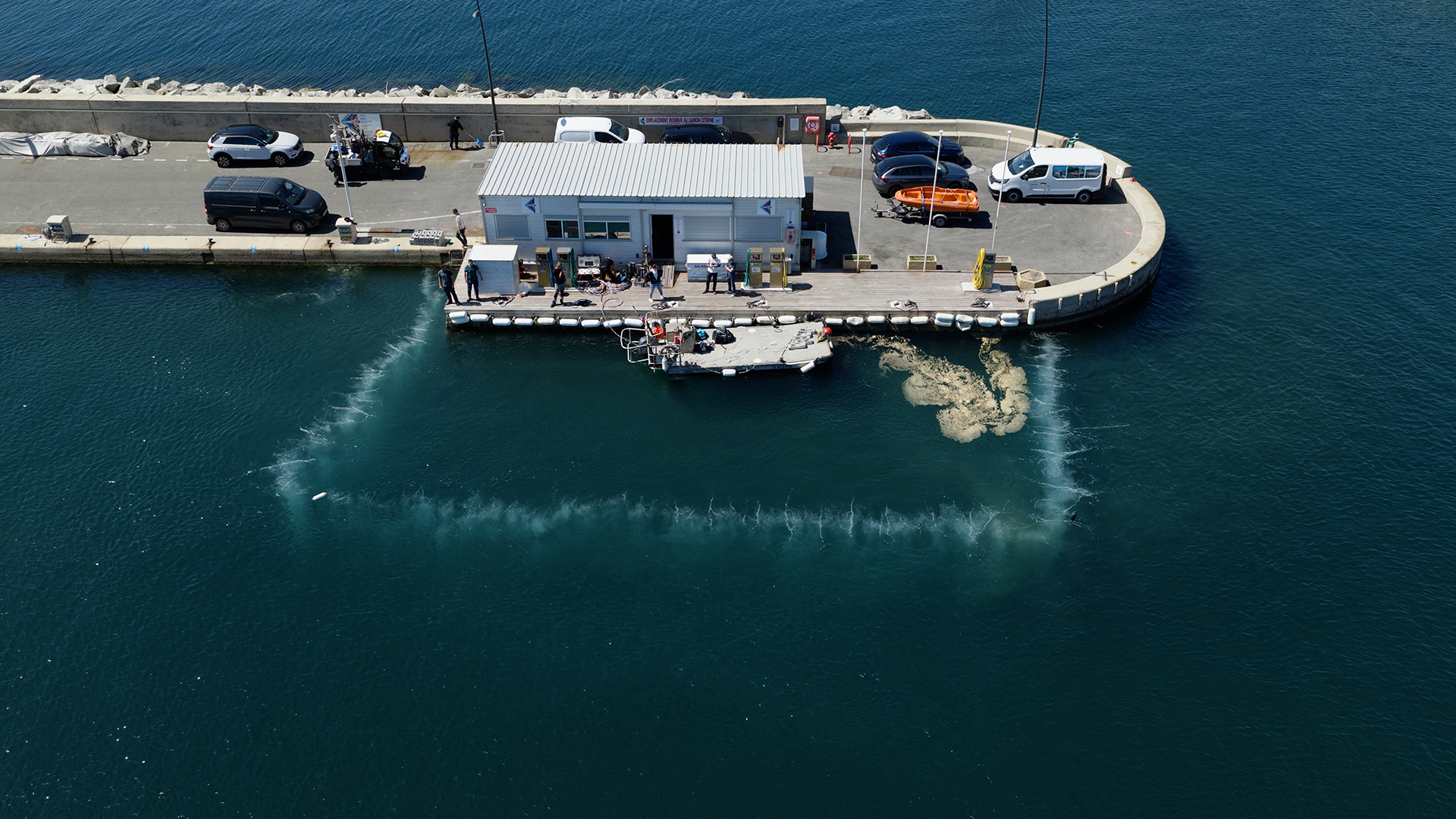
One of the most effective remedial solutions is to install a bubble curtain to trap hydrocarbons around the source of the leak. The bubble curtain works as a protective screen, preventing oils floating on the surface from spreading throughout the harbor. This ingenious system uses principles of fluid mechanics and is completely harmless to local wildlife.
Find the details below.
The bubble curtain can act as a containing wall if hydrocarbons are spilled in a marine harbor or marina. It uses compressed air in the correct quantities at the correct pressure to create a current that works as a flexible barrier, blocking floating elements such as oil molecules. Hydrocarbons are then trapped behind the line of bubbles, containing the spill’s spread and offering an opportunity to implement cleanup methods.
Our Invisibubble bubble curtain is easy to deploy in high-risk areas and can quickly and effectively stop hydrocarbon pollution from spreading.