

How can the impact of sedimentation be reduced?
Sedimentation is a natural geological process in which organic or mineral particles (sand, silt, clay, and mud) are carried by the water and deposited due to gravity’s pull when the current slows. In harbors, marinas, and canals, the phenomenon is accentuated by changes to local hydrodynamics: seawalls and artificial piers create calm areas that encourage sediment deposits. In river mouths, sedimentation often occurs when sediment-laden river water meets seawater.
A recurring problem
Sedimentation has three main consequences: less available depth, thus risking vessels running aground; the need to invest huge sums of money to continue commercial or leisure activities; and an accumulation of pollutants (such as heavy metals and hydrocarbons) trapped in the sediment, which makes its removal difficult.
Currently, there are two main approaches to tackling sedimentation: preventative and remedial.
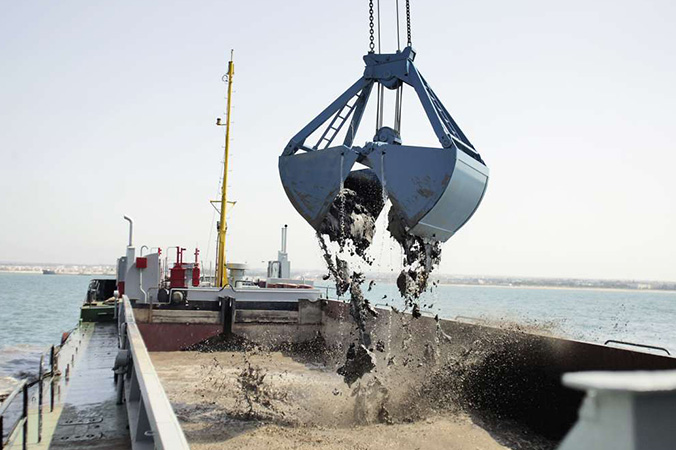
The most common remedial technique is dredging.
This can be mechanical, using hydraulic excavators or clamshell dredgers on docks (a technique most appropriate for smaller areas such as marinas). It can also be hydraulic, using trailing suction hopper dredgers, which suck up a mixture of water and sediment (ideal for large channels).
Preventative techniques focus instead on resuspending particles.
Injecting water at low pressure into the sediment layer restores it to a fluid state, allowing it to be carried away by natural currents (an outgoing tide). Plowing using a vessel-drawn plow returns sediment to suspension so it can be evacuated naturally.
A smart investment
Tackling sedimentation represents an enormous expense. Costs vary depending on the nature of the sediment (mud is more expensive to deal with than sand) and its level of pollution. Globally, harbor and channel maintenance costs several billion euros each year.
Growing costs and environmental limitations mean that innovation is geared toward “natural” and technological management, focusing primarily on prevention.
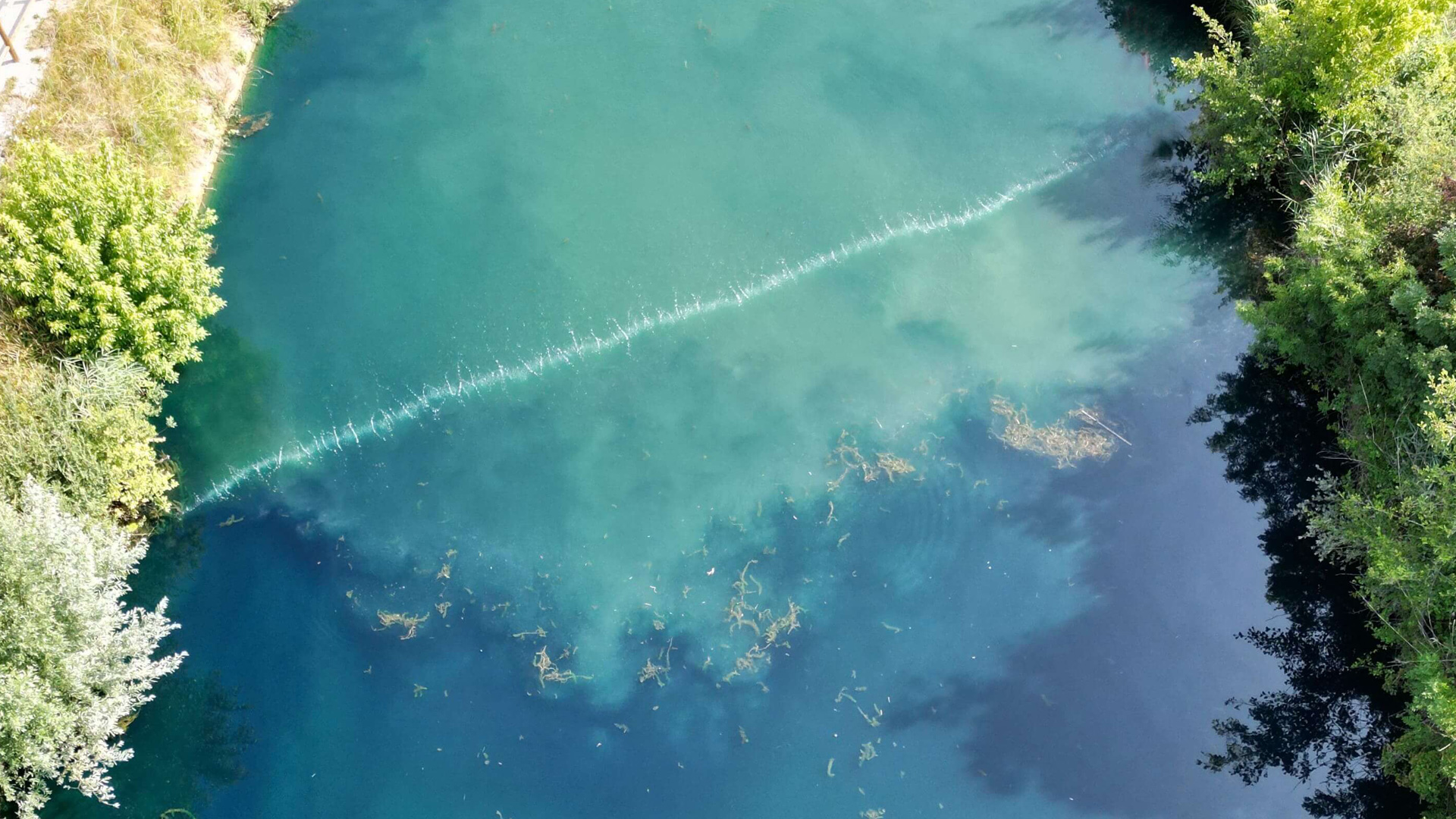
Bubble curtains, such as our Invisibubble technology, are used in two ways:
- Limiting ingress of fine sediment into closed harbor basins
- Reestablishing water movement to carry away sediment particles, as in water injection or plowing.
Bubble curtains—whether single, double, or triple in some specific cases, such as managing very fine sediment—are easy to install at a range of depths and in multiple kinds of aquatic environment, including marine harbors, rivers, bays, lakes, and reservoirs.
Installing a bubble curtain at the mouth of a watercourse prevents clear water from mixing with sediment-laden water. Some sedimentation will remain, but it will be greatly reduced. This helps improve management of the sandbanks typical of watercourse outlets, in turn reducing the significant costs linked to dredging as well as the associated environmental impacts.
If a bubble curtain cannot entirely eliminate the sedimentation issue, it will nonetheless reduce both its impact and the need for dredging. In terms of costs, it has been proven that, even if the initial outlay for implementing such systems may be costly, it will save money over the long term as the bubble curtain will ultimately reduce the need for human intervention and traditional dredging operations.