

Cigarette butts: the invisible impact of a global environmental scourge
In just a few decades, cigarette butts have become the most common type of trash picked up on beaches and in urban environments around the world. Despite only being a few centimeters in size, they hide a complex environmental reality. How have we gone from a biodegradable product to a ubiquitous plastic pollutant?
The evolution of the cigarette: from pure tobacco to a plastic filter
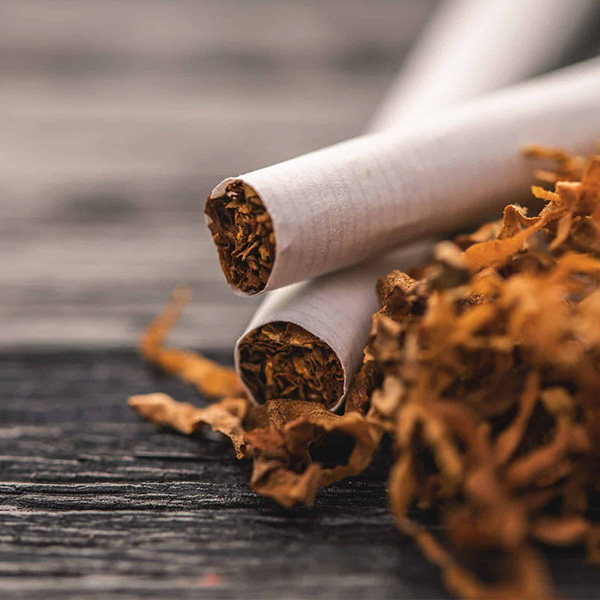
Tobacco has been used for millennia, but the industrialization of cigarettes as we know them today took off in the 20th century. At first, cigarettes had no filters—the tobacco was just rolled in paper. It was only in the 1950s that the industry adopted filters widely, mainly in response to the first health concerns surrounding tar and nicotine.
Filters were designed to give smokers the illusion of safety. However, it’s what they’re made of that’s the core of today’s problem. They’re not cotton or paper, but cellulose acetate, a type of synthetic plastic derived from wood through a chemical process. Using cellulose acetate has standardized cigarettes worldwide and encouraged their spread to every section of society and every continent.
Cigarettes are now smoked worldwide. Despite public health policies, mass production continues to grow in some regions of the world, with many people making dropping their cigarette butts an everyday habit.
The tiny filter, designed to capture toxic substances from the smoke, has become a huge source of plastic and chemical pollution that cannot be managed by any central authority.
Six trillion cigarettes are produced worldwide every year
To understand the climate emergency caused by smoking, we need to take a look at the orders of magnitude. An estimated six trillion cigarettes are produced worldwide every year. Of this colossal volume, almost two thirds will end up simply dropped in the environment or on the street after being smoked, instead of in ashtrays or trash cans.
- A shocking figure: around 10-15 billion cigarette butts are dropped every day around the world.
- Critical areas: although urban areas are the main places cigarette butts are dropped (in the street and in gutters), the real problem lies in what happens to them next.
When they’re dropped in the street, they don’t stay there. They’re carried by the wind and rainwater to sanitation networks. Because water treatment plants aren’t designed to filter out such small objects, the vast majority of cigarette butts end up in rivers and ultimately the oceans.
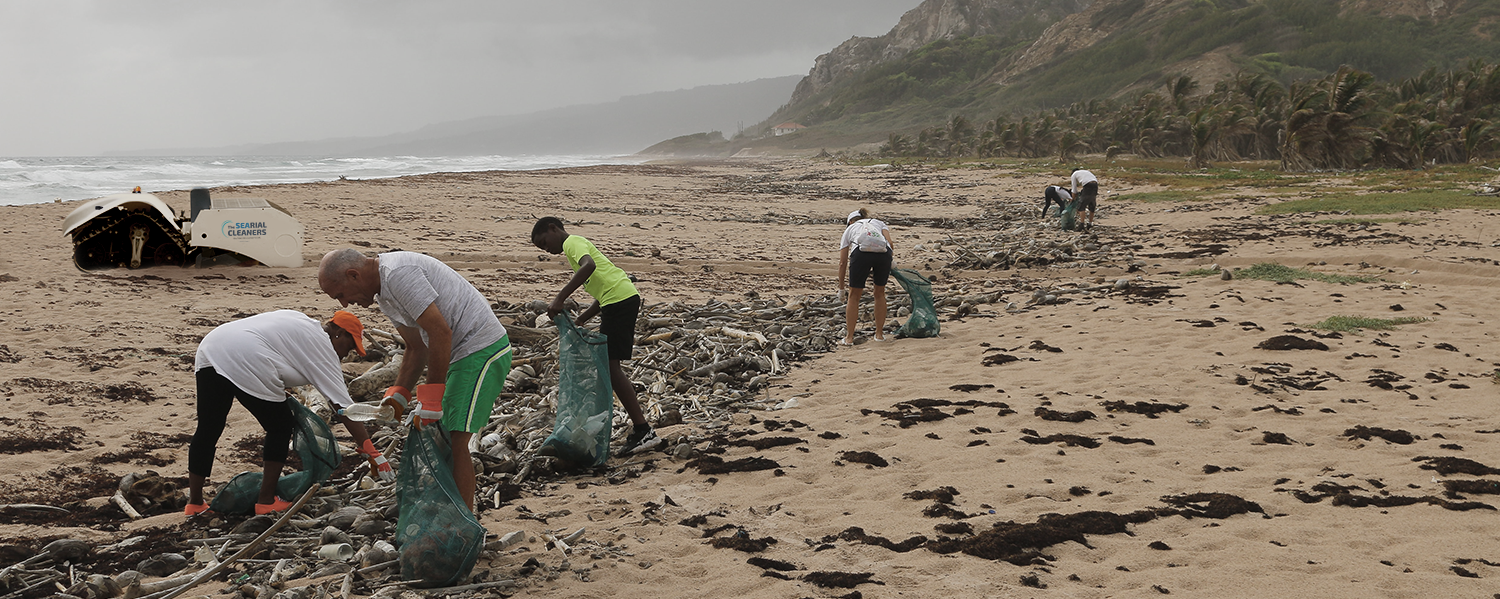
On beaches around the world, cigarette butts make up around 30% to 40% of waste collected during citizen cleanups, and are often found in greater numbers than plastic bags or straws. Their omnipresence makes cigarette butts the most numerous type of marine waste.
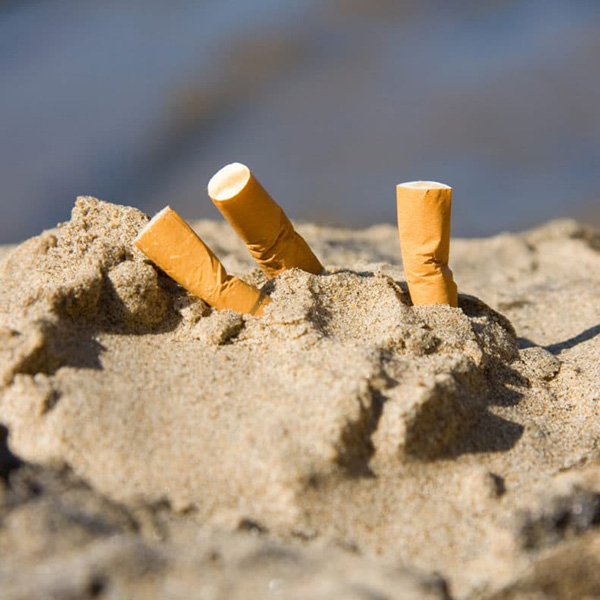
It takes between 12 and 15 years for a cigarette butt to break down visibly in the environment.
Environmental impact: Long-term chemical pollution
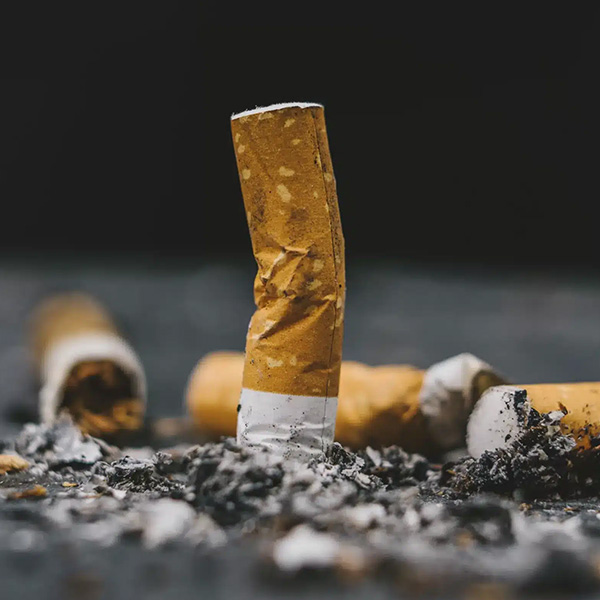
How long does it take a cigarette butt to break down and what dangers does it pose to the environment?
The commonly held idea that a cigarette butt is “natural” is a major environmental error. In actual fact, a single cigarette butt is like a miniature “chemical bomb”.
- Breakdown time: it takes between 12 and 15 years for a cigarette butt to visibly break down in the environment. But that doesn’t mean it’s gone. Cellulose acetate breaks down into microplastics that last for decades and find their way into the food chain.
- Chemical toxicity: the filter is designed to trap harmful substances. When it enters the water, it releases a cocktail of over 4,000 chemicals, including heavy metals (lead and mercury), arsenic, hydrogen cyanide, and pesticide residues.
A single cigarette butt can pollute up to 1,000 liters of water
Biodiversity impact
- Water pollution: a single cigarette butt can pollute up to 1,000 liters of water, making it unfit to support a range of small aquatic organisms.
- Danger to wildlife: many birds, fish, and sea turtles confuse cigarette butts for food. When they eat them, it causes intestinal blockages and slowly poisons the animal.
- Soil: as cigarette butts break down, they change the chemistry of the soil, affecting plants’ growth and the survival of microorganisms that are essential to soil fertility.
In conclusion
Cigarette butts are more than visible waste—they’re a complex pollutant that requires global awareness, from increased manufacturer responsibility to a radical change in individual behavior.
The Searial Cleaners offers innovative solutions to collect cigarette butts buried in beach sand without damaging the surrounding ecosystem. They’re the perfect complement to people-powered cleanups, helping to collect small waste items that a person or a larger screening tool would miss.