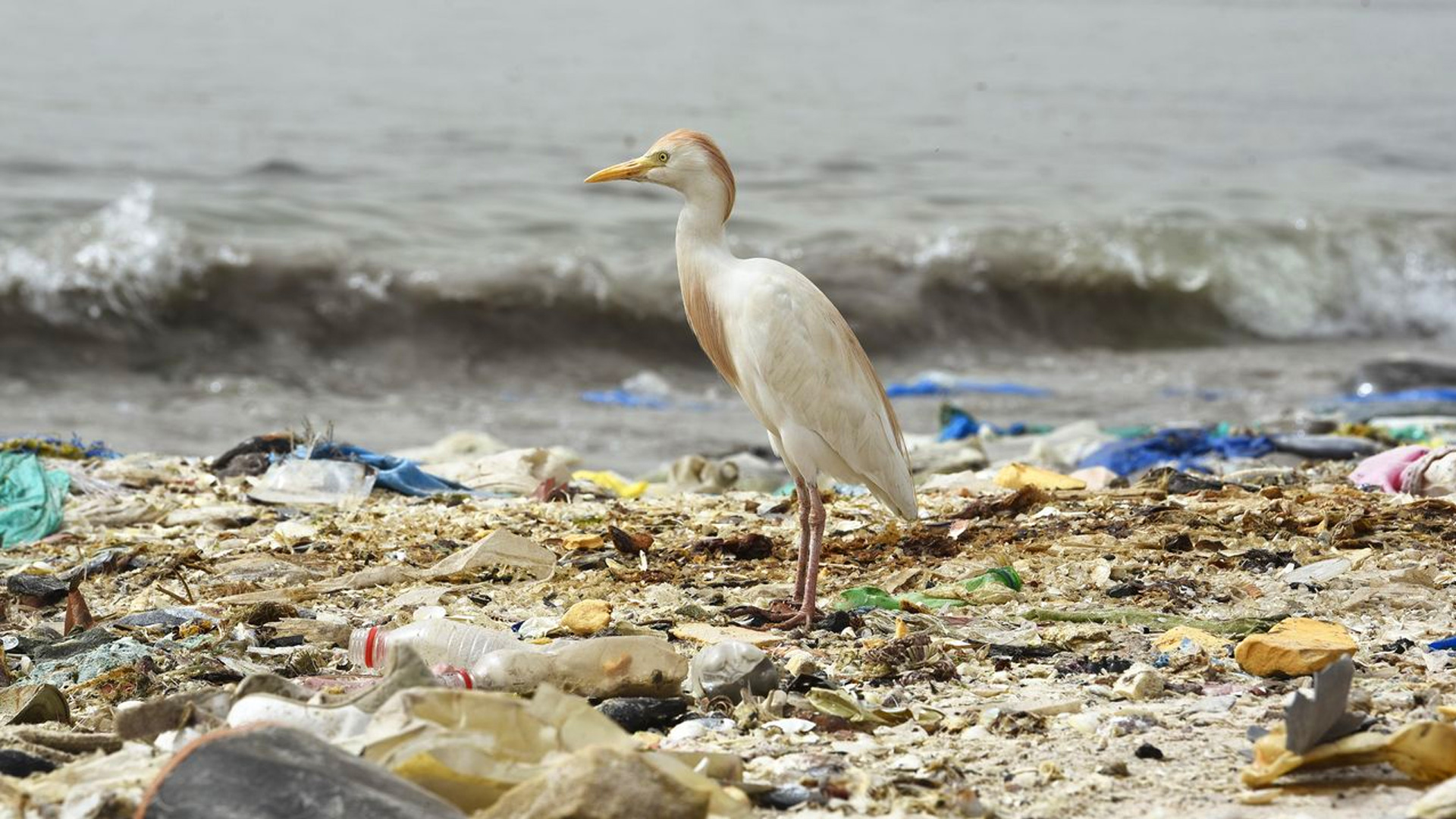


Plastic bags: short lifespans, lasting consequences
The story of plastic is one of a meteoric rise. Since the 1950s, global production has experienced exponential growth, rising from 2 million tons per year then to over 450 million tons today. It’s estimated that almost 10 billion tons of plastic have been produced overall, with over half of this figure coming from just the last 20 years.
Plastic bags: a throwaway culture
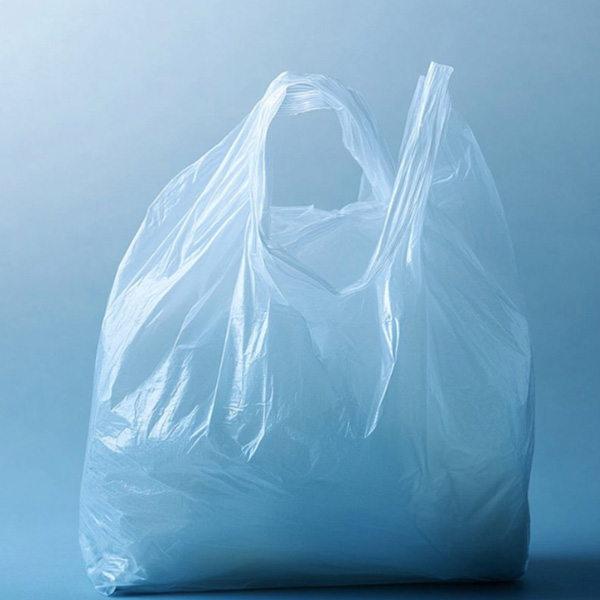
Plastic bags have become an icon of today’s “throwaway culture”.
They were first widely introduced in the mass retail world in the 1970s for their light weight and low cost, and now 500 billion bags are used each year worldwide. But their lives are fleeting: a plastic bag is used for an average of 12 minutes before being thrown away.
Plastic bags are produced using a process called blown film extrusion. They are made using synthetic polymers (accounting for 90%–99% of their weight), which are mainly derived from natural gas and petroleum processing, along with a range of chemical additives.
Most plastic bags are made with polyolefins, a family of plastics valued for their flexibility and strength. There are three kinds, depending on the purpose of the bag: high-density polyethylene (HDPE/PEHD)—this is the material used in the thin, “noisy” bags found in supermarkets (fruit and vegetable bags). Low-density polyethylene (LDPE)—used for thicker, flexible, shiny shopping bags. Polypropylene (PP)—often used for “reusable” or woven shopping bags. It withstands heat and repeated folding better.
To give bags their final properties, manufacturers include additives into the melted polymer (between 1% and 10% by weight). Colorants: pigments added to give the desired color. Plasticizers (e.g.: phthalates: sometimes used to improve flexibility. UV stabilizers: to prevent the bag becoming fragile and disintegrating too quickly in sunlight. Slip agents: to stop bags sticking together during manufacturing or when opening. Antioxidants: to protect the plastic from thermal degradation during manufacturing.
A plastic bag is used for an average of 12 minutes before being thrown away
The figures are staggering: according to estimates, the sea now contains between 75 and 200 million tons of plastic. Every year, around 11 million additional tons are discharged into the water, the equivalent of a garbage truck every minute.
Plastic bags alone account for 5% of ocean waste, with almost 66 billion of them ending up in the sea each year.
But this waste doesn’t disappear. It travels. Carried by ocean currents, it accumulates in five major convergence zones known as ocean gyres. The most famous, the Great Pacific Garbage Patch, is located in the North Pacific and is three times the size of France.
However, pollution isn’t just a distant problem—the Mediterranean Sea is one of the most polluted in the world, with 600,000 tons of plastic finding its way there every year.
Most of this plastic (80%) comes from activity on land, which is carried by rivers or abandoned on coastlines frequented by tourists.
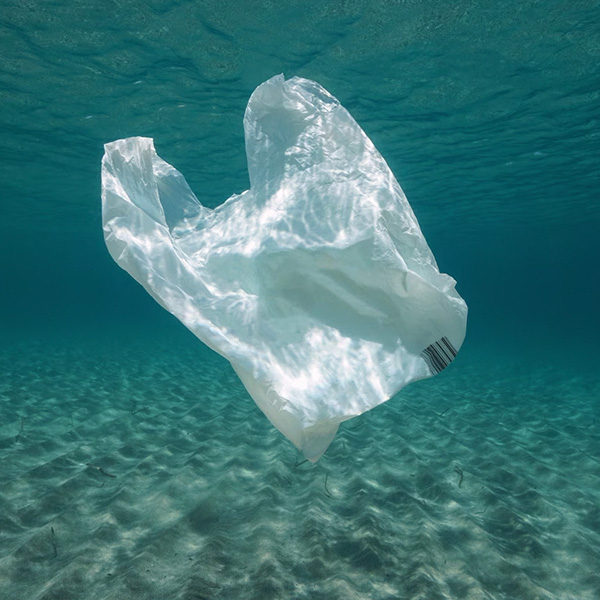
Plastic bags alone account for 5% of marine waste
The impact on marine plant and animal life
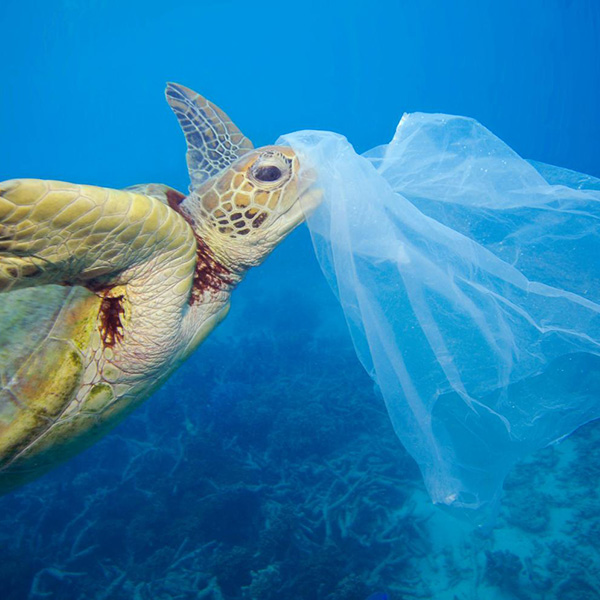
The impact on biodiversity is devastating. Over 800 marine species are directly threatened by plastic waste. Plastic bags are particularly treacherous: when they float in the water, they resemble jellyfish, the main food source for sea turtles.
When they eat plastic bags, it causes fatal intestinal blockages or a false sensation of fullness, ultimately resulting in starvation. An estimated 100,000 marine mammals and a million birds die each year as a result of consuming or becoming tangled in plastic.
Its persistence also poses dangers. A plastic bag takes between 20 and 400 years to break down in water, depending on UV exposure and abrasion. But remember: “breaking down” doesn’t mean it’s gone.
The plastic becomes microplastics (particles smaller than 5 mm), which enters the entire food chain, from plankton to our plates. As it breaks down, plastic also releases toxic chemical additives, disrupting the endocrine system of marine species and causing lasting changes to ecosystems’ health.
A plastic bag takes between 20 and 400 years to break down in the water
The environmental impact
Is the environmental impact of plastic bags irreversible?
Despite recent legislation seeking to ban them, global demand—driven by packaging—continues to rise. If current trends continue, plastic production could triple by 2060, making it almost impossible for many developing countries to manage waste created on land.
Tackling plastic waste is a priority for The Searial Cleaners and its partners, who are focusing first on limiting plastic waste in the sea, then stopping more from arriving.
In conclusion
Plastic bags are a source of pollution it will be difficult to free ourselves from, and above all, they represent a permanent danger to marine life, which finds itself the victim of a nefarious intruder.
It’s high time to put strong measures in place to remove this waste from the sea. These measures need to be complementary and supported by innovative, environmentally friendly technology to take action at multiple levels.
Removing this waste from our seas as quickly as possible is crucial so its wildlife can be left in peace.